
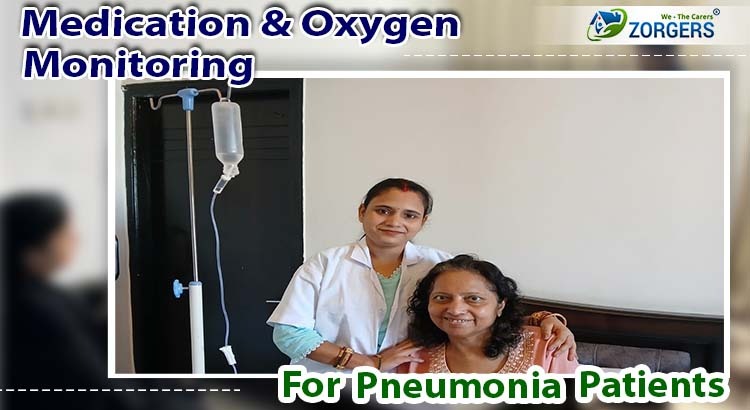
Pneumonia is one of the most common respiratory infections affecting elders and those with weak immunity. While many cases require hospitalization, a large number of patients can recover safely at home with proper medication management, oxygen monitoring, and caregiver support.
This guide explains how families can ensure safe home care for pneumonia patients and prevent complications.
Understanding Pneumonia & Why Home Monitoring Matters
Pneumonia causes inflammation in the lungs, making it difficult for oxygen to reach the bloodstream. In elders, the illness progresses faster, and delays in treatment can be dangerous.
This is why timely medication, accurate oxygen monitoring, and professional supervision play an important role in recovery at home.
Medication Management: Do’s & Don’ts
✔ Follow the Doctor’s Prescription Strictly
Different types of pneumonia require different treatments:
• Bacterial → Antibiotics
• Viral → Antivirals + supportive care
• Fungal → Antifungals
Never self-medicate, and do not skip or change doses.
✔ Keep a Medication Chart
Create a simple table to track:
• Name of medicine
• Timing (morning / afternoon / night)
• Dose
• After/before food?
• Caregiver signatures
This prevents missed or double doses.
✔ Complete the Full Course of Antibiotics
Even if the patient feels better after 3–4 days, do not stop antibiotics early.
Incomplete courses cause:
• Relapse
• Higher severity
• Antibiotic resistance
✔ Use Fever & Cough Medicines Carefully
For pneumonia patients, avoid over-the-counter cough suppressants unless prescribed.
Cough helps clear the lungs—suppressing it unnecessarily may worsen breathing.
✔ Nebulization:
Follow Correct Technique
Nebulization helps open airways.
Follow these rules:
• Use correct medicine dose (as per doctor)
• Clean the nebulizer after every use
• Replace tubing/filter periodically
• Ensure the patient sits upright during nebulization
Oxygen Monitoring: Keeping Levels Safe at Home
Monitoring oxygen saturation (SpO₂) is the most important daily task for pneumonia care at home.
✔ How to Measure Oxygen Correctly
• Use a good-quality pulse oximeter
• Ensure patient’s fingers are warm
• Take readings after 30 seconds of steady breathing
• Note readings 3–4 times a day (more if symptoms worsen)
✔ Ideal Oxygen Levels
• Normal: 95–100%
• Mild Risk: 92–94% – Increase monitoring
• Danger Zone: Below 92% – Needs oxygen support
• Emergency: Below 88% – Immediate hospitalization required
Oxygen Support at Home: Safe Practices
✔ Only Use Oxygen If Prescribed
Avoid starting home oxygen just because levels dropped once.
Doctors usually prescribe oxygen if saturation stays <92% consistently or the patient shows breathlessness.
✔ Ensure Proper Oxygen Setup Essential components:
• Oxygen concentrator or cylinder
• Flow meter
• Humidifier bottle
• Nasal cannula / mask
• Backup power (for concentrators)
✔ Safe Oxygen Flow Rates
• Do not exceed the doctor’s recommended flow rate (commonly 1–5 L/min).
• High flow without monitoring can cause: o Carbon dioxide retention
Dry nose/throat
Headache
Lung irritation
✔ Keep Humidifier Clean
• Use only distilled or clean water
• Change water daily
• Clean bottle every 24 hours to prevent infection
✔ Follow Fire & Safety Precautions
• No smoking near oxygen
• Keep at least 5 feet away from flame or heaters
• Do not use oily products on the nose when oxygen is used
• Store cylinders upright and firmly secured
Daily Monitoring Checklist for Families & Caregivers
- ✔ Temperature
✔ SpO₂ level
✔ Respiratory rate (ideal: 12–20 breaths/min)
✔ Cough severity
✔ Chest pain
✔ Food and water intake
✔ Urine output (sign of dehydration)
✔ Mental alertness (confusion is a danger sign) Keep a daily log to share with your doctor.
When to Seek Immediate Medical Help Shift the patient to a hospital if any of these occur:
- • SpO₂ consistently below 88–90% despite oxygen
• Blue lips or fingertips
• Severe chest pain
• High fever for 3+ days
• Inability to breathe while lying down
• Confusion or excessive drowsiness
• Very fast breathing (>28 breaths/min)
• No improvement after 48–72 hours of medications
Early action saves lives.
How Professional Home Care Helps in Pneumonia Recovery
-
Hiring trained caregivers or nurses ensures:
• Correct medication timing
• Nebulization and oxygen management
• Monitoring vitals
• Physiotherapy & breathing exercises
• Hygiene and infection control
• Nutrition & hydration management
• Preventing bed sores (if bedridden)
Companies like Zorgers Home Healthcare provide:
- • Verified caregivers
• Experienced nursing staff
• On-demand oxygen setup
• Physiotherapy at home
• 24×7 patient monitoring support
This greatly reduces the risk of complications and speeds up recovery.
Final Words
Recovering from pneumonia at home is absolutely safe when medications, oxygen levels, and hygiene are properly managed.
Families must stay alert to symptoms, follow prescriptions strictly, and seek immediate help if breathing becomes difficult.